Both Ends of the Leash
Anthrozoology & The Road to Veterinary Medicine
I came to anthrozoology through the same pull that draws most of us into veterinary medicine: a deep conviction that animal wellbeing matters, and that the human-animal relationship is worth taking seriously on its own terms.
My path has been deliberately broad. Clinical rotations, behavioral modification and training, research, and hands-on animal handling across species have all shaped how I think about what it means to care for animals AND the people who love them.
I'm particularly drawn to small animal medicine with a focus on the human-animal bond as a clinical variable. How does the quality of a dog's relationship with its owner affect treatment adherence, anxiety, and outcomes? These questions sit at the intersection of everything I've studied.
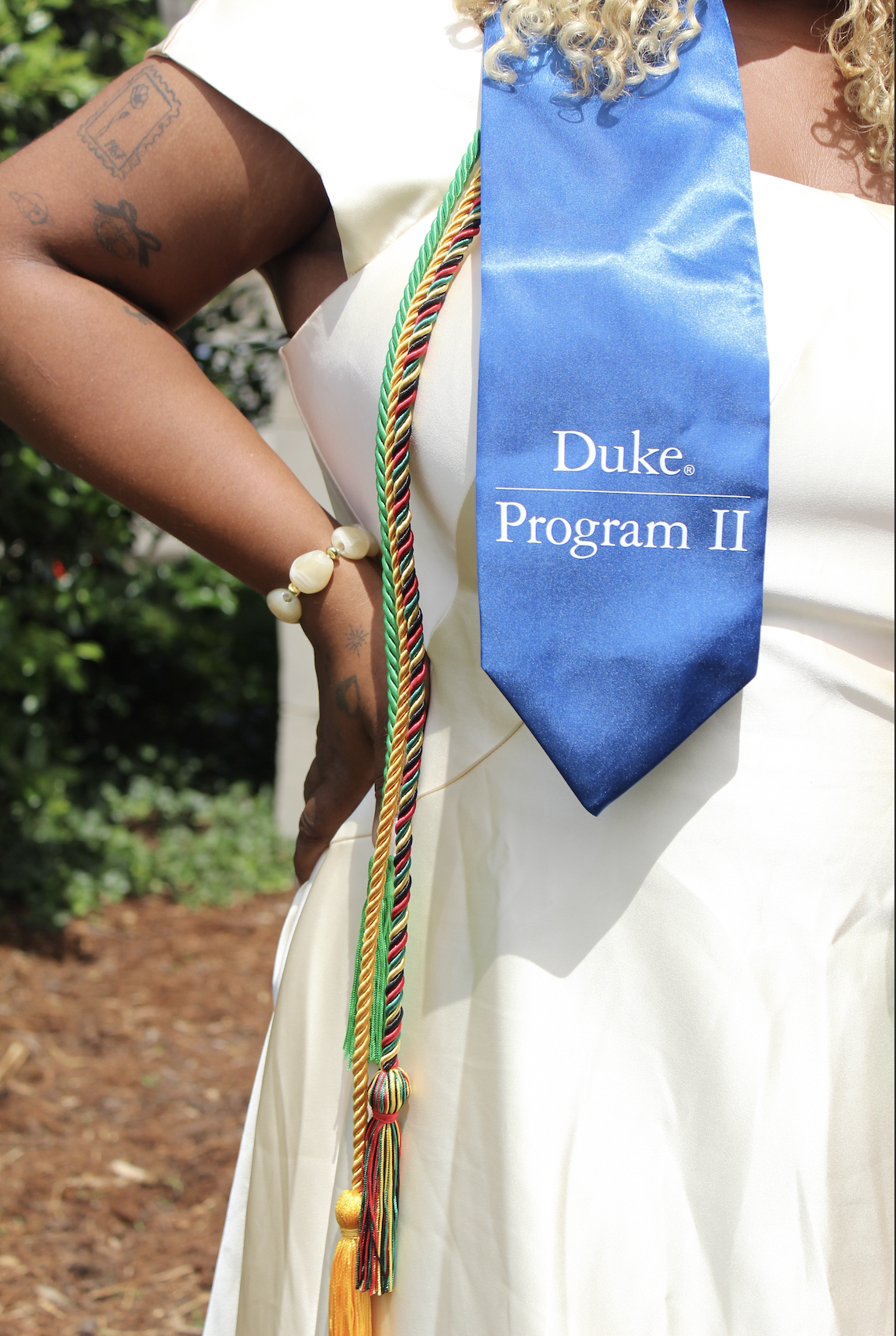
At Duke, I built a degree from scratch because no existing major could hold what I was trying to study. I called it Anthrozoology of Companion Animals, and it was exactly what it sounds like: an attempt to understand the human-dog relationship with the same rigor and curiosity that scientists bring to any other complex biological and social phenomenon. I took classes in evolutionary psychology, cultural anthropology, animal cognition, and veterinary medicine. I coordinated research at the Duke Canine Cognition Center under Dr. Brian Hare, where NIH-funded studies on canine social cognition gave me my first real taste of what it means to ask a scientific question carefully. I interned with a turtle rescue team and learned that wildlife rehabilitation is equal parts patience, improvisation, and genuine love for creatures that will never thank you for it.
My honors thesis on what routine leash walks reveal about the human-dog bond brought all of it together. Twenty-seven dyads. Quantitative instruments and ethnographic observation. A finding that surprised me: the depth of a person's bond with their dog, as they describe it, doesn't reliably predict how well they coordinate with that dog in motion. Love and attunement are different things. That distinction feels important, and not just for research.
Now I'm in my gap year, deepening my clinical experience and preparing veterinary school applications. I'm drawn to small animal medicine and the the relational dimensions of it: the way a dog's anxiety in a clinic waiting room is inseparable from its owner's anxiety, the way treatment adherence depends on trust that extends beyond the exam table. I want to practice medicine that takes that seriously.
This site is the paper trail of how I got here, and where I'm going.
Honors Thesis
Leash Language: What Routine Walks Reveal About the Human-Dog Bond
Defended Spring 2025 Self-Designed Degree
Anthrozoology of Companion Animals: A Comparative Analysis of Both Ends of the Leash
Program II at Duke University | B.S with Highest Distinction Next Chapter
Gap Year → Veterinary School
Expansion of thesis sample size, Publication and Clinical experience Graduation with Distinction Thesis “Leash Language: What Routine Walks Reveal About the Human-Dog Bond”
Advisor — Dr. Brian Hare, Duke Canine Cognition Center
Committee — Dr. Anne-Maria Makhulu · Dr. Margaret Gruen
Sample — 27 human-dog dyads, mixed-methods design
Instruments — MDORS · EXP-TOT Subscale · Leash Tension Metrics
My thesis argues that the leash is a profoundly understudied communicative medium: a physical channel through which humans and dogs negotiate attention, proximity, and relational attunement in real time. Rather than treating leash behavior as mere obedience data, I situate it within human-animal bond theory and ask: what does walking together actually reveal?
The central finding, an attachment-attunement dissociation, suggests that how deeply a person loves their dog (global bond quality, captured by MDORS) is functionally distinct from how well they coordinate with them in motion (context-specific dyadic attunement, captured by EXP-TOT).
Key Quantitative Finding EXP-TOT, a purpose build survey instrument designed to capture overall walk appraisal, confidence in communicative efficiency and contextual trust and comfort, explained up to 35% of variance in leash-pulling frequency; while MDORS showed negligible associations with the same tension metrics, revealing two separable relational layers.
THEORETICAL CONTRIBUTIONAttachment–Attunement Dissociation
Global bond quality and moment-to-moment dyadic coordination are measurably distinct constructs: you can love your dog deeply and still be out of sync on the sidewalk.
A Degree Built from Scratch
Anthrozoology of Companion Animals: A Comparative Analysis of Both Ends of the Leash
Recipient of 2026 Best Senior Thesis in Program II at Duke University
Duke's Program II lets students design their own degree when no existing major captures their intellectual vision. Mine bridges evolutionary biology, cognitive science, cultural anthropology, and veterinary medicine to ask a deceptively simple question: what does the human-companion animal relationship actually consist of, and what does it reveal about both species?
Evolutionary & Comparative Psychology
Cultural Anthropology & Ethnographic Methods
Animal Cognition & Behavior
Veterinary Medicine & Animal Welfare
Human-Animal Bond Theory
Quantitative & Mixed-Methods Research